At 13 years old, Kaíque* didn't know
the letters of the alphabet.
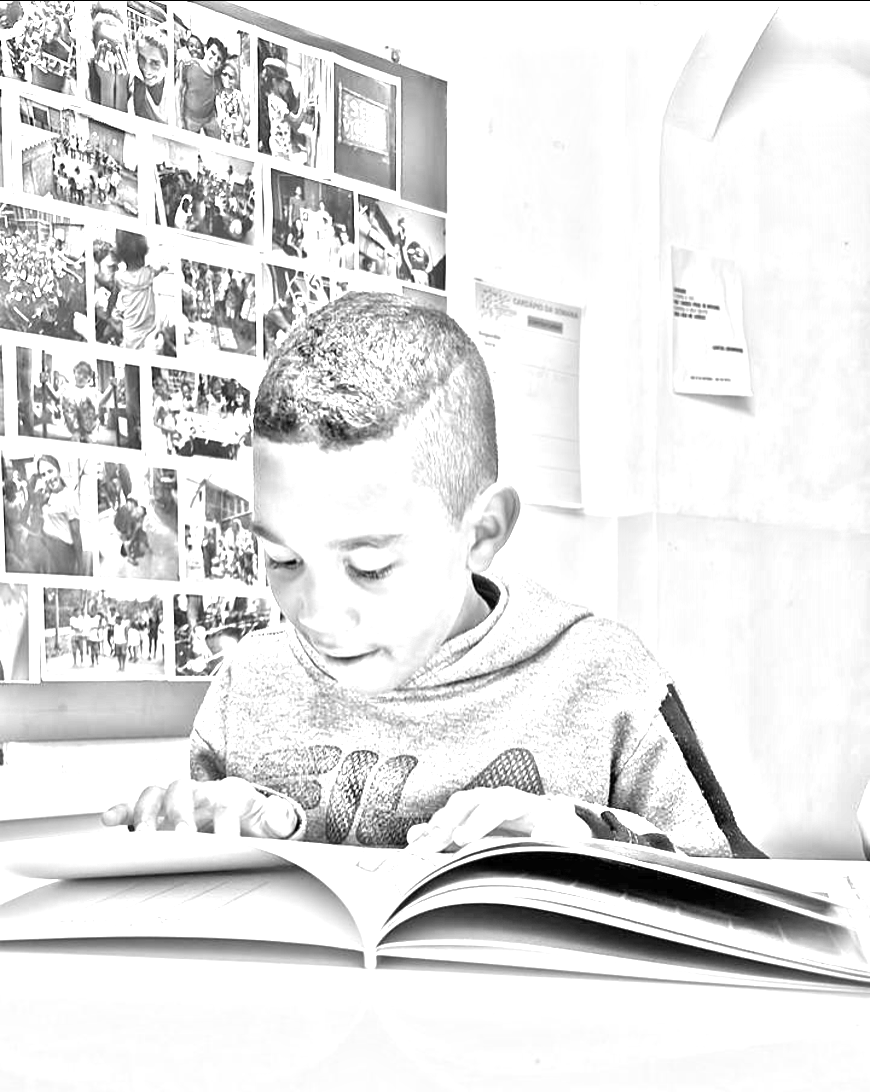
At 13 years old, Kaíque* didn't know
the letters of the alphabet.
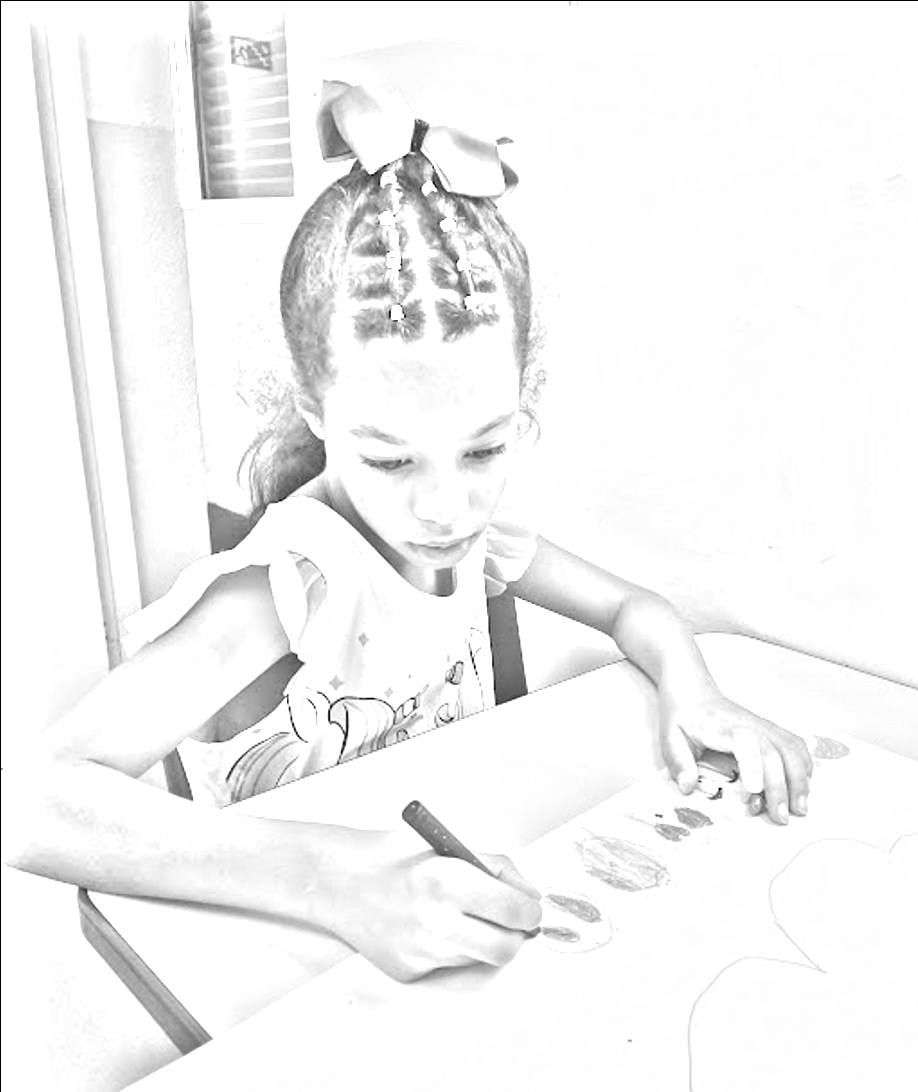
He came to Rizomas through a referral from his neighborhood school. A resident of Jardim Macedônia, he grew up in isolation. His mother went years without leaving the house and did not allow her children to interact with other people.
Kaíque didn't read, didn't write,
couldn't speak out loud.
Didn't make eye contact.
In the first days, he sat in the corner. Head down. Silent.
But he came. Every day, he came back.
Nobody asked him to introduce himself. Nobody pushed him to participate more. The educators let him be, at his own pace.
He drew. That's what he did.
And someone noticed.
The drawings found space on the walls.
He found space in the group.
* All names of children and adolescents in this report are fictitious, in accordance with the Brazilian Statute of the Child and Adolescent (ECA) and to protect their identity.
To understand what happened next,
we first need to get to know Instituto Rizomas.
The Territory
Capão Redondo, southern São Paulo.
Life expectancy in São Paulo's high-income districts.
Life expectancy in Capão Redondo.
Nearly twenty years of difference.
Depending on the ZIP code where you're born.
out of 96 São Paulo districts.
That's where Capão Redondo ranks.
Source: Inequality Map 2024 — Rede Nossa São Paulo
of Rizomas participants live on less than R$800 per month (~US$150).*
*Per capita household income
High rates of violence against women and racial violence. School dropout. Limited access to healthcare, culture, and education. Drug trafficking on more corners than almost anywhere else in the city.
This is the context in which Instituto Rizomas operates.
Social Impact Measurement Report
The Institute
Rizomas was born in 2017 as a volunteer Sunday project in Portelinha, one of the most precarious communities in Capão Redondo. In 2021, it became an Institute. In 2023, it began serving 100 children daily in after-school programs.
"We provide quality education so that every child becomes an agent of transformation in their environment."
Delivery and Reach in 2025
Monday to Friday. Portuguese, math, and English. Integrated socioemotional skills.
served since 2021
completed the year
Sundays. Led by volunteers. Focused on emotional regulation and awareness of self and others.
volunteers
activity Sundays
planning meetings
Saturdays. The entry point to the Institute. Activities for families. First year of the program.
open events
gatherings
participants this year
Direct support to families in the territory. Gatherings, emotional support, and food basket distribution.
family gatherings
participants
food baskets delivered
What results has all this
work produced?
Literacy rate among Rizomas participants.
Reading & Writing
of participants who couldn't read or write at the beginning of the year learned to read and write.
Math
of children who couldn't multiply finished the year performing multiplication and solving math problems.
These are results that stand out in any context.
In Capão Redondo, they're extraordinary.
But what do these numbers say
about these children's lives?
In adolescence, life satisfaction typically drops. The body changes, pressures increase, the future feels uncertain. In contexts of vulnerability, this drop is usually even steeper.
At Rizomas, the opposite happens.
How adolescents rate their own lives (0–100 scale)
difference between those who just arrived and those who've been in the program for 3 years.
"Rizomas brought ME back, in a way I had never seen myself before."
Júlia, 14 years old
Júlia came to Rizomas dragged along by her cousin. She was bullied at school, developed eating compulsions, wouldn't accept hugs. At home, she was afraid of her father. At school, she was the girl who hit others.
Today she comes Monday through Friday. She managed to talk to her father for the first time. She became more affectionate. Her grades improved. She takes care of her mother, who suffers from depression.
"I'd rather come to Rizomas 50,000 times over than go to school, because here I can be myself."
Why this happens
For a child in a territory like Capão Redondo to resist environmental pressures, absorb knowledge, and use that knowledge to forge their own path, they need to develop capabilities that most programs don't measure and few know how to build.
Newcomers vs.
2+ year participants.
Having dreams and seeing paths to achieve them.
After-school (2+ years) +
socioemotional vs. others.
Recognizing what they feel, calming down, returning to the task after frustration.
High attendance (≥90%) vs.
low attendance (≤73%).
Keeping commitments, taking care of belongings, maintaining routines.
These aren't skills that disappear after the test. They're tools children carry for life — for the next school year, for work, for college, for everything that 96% literacy will open up for them.
High attendance (≥90%) vs.
low attendance (≤73%).
peer pressure resistance.
In a territory consumed by violence and drug trafficking, this is concrete protection.
Rizomas has 96% literacy because it first builds what enables learning. The grade is a consequence. What remains is what made it possible.
Self-discipline has more influence on academic performance than intelligence. — Duckworth & Seligman, 2005
To learn about all the effects of Rizomas on students' lives:
Read the full scientific report ↗The soil the program builds
Capabilities don't grow in a vacuum.
For a child to develop emotional regulation, they need a place where it's safe to make mistakes without judgment. To develop future orientation, they need adults who see their potential and encourage them to reach it. To develop responsibility, they need an environment with clear and fair rules.
We're not talking about physical safety, although that matters too. We're talking about emotional belonging. The kind that rarely exists in an overcrowded school or in a home where survival comes before everything else.
Of the factors most linked to life satisfaction for these children,
three come from the environment around them.
A nurturing environment
Friendships that pull toward good
Recognition of every step taken
The educators didn't force Kaíque to participate. They let him be, at his own pace. They noticed what he did well. They gave him space. That's how this environment is built.
A stable, trusted adult is the most consistent protective factor for a vulnerable child — a 40-year study following 698 at-risk children. Werner & Smith
Emotional support is a precondition for cognitive development: adversity without protective relationships compromises the very functioning of the developing brain. Shonkoff, Harvard Center on the Developing Child
Leo, educator
Gabi, educator
Young participant
Young participant
"They taught me what affection is."
Tatiane, mother of four
Tatiane lived with a violent, alcoholic husband. She used drugs. She had no affection for her children. She thought being a mother was about providing food and shelter. She was cold, didn't hug them.
Her children started attending Rizomas. On family Sundays, Tatiane painted alongside them. Those were the moments she got off drugs.
The oldest daughter learned to express herself at Rizomas. One day, she said:
"Mom, I don't like seeing you like this. I want to see you well."
Tatiane got off drugs. She left the abusive relationship. She developed affection for her children. When she was hospitalized for 27 days, Rizomas supported her with food and childcare.
A child learned to express herself. She brought it home. She changed her mother. The mother changed the family.
"We provide quality education so that every child becomes an agent of transformation in their environment."
This is what that mission means.
Remember Kaíque?
That 13-year-old who didn't know the letters of the alphabet now reads books and writes poetry. He's researching higher education. He became a volunteer for the Sunday socioemotional program.
The boy who used to sit in the corner with his head down now helps other children find their own voice.
The stories of Kaíque, Júlia, and Tatiane are three.
The data in this report reflects 78.
In 2026, more children will have access to what they found here.
Measurement and report by
www.socialimpact.com.br